

Imagine handing over $18,000 for a used SUV, driving it home, and discovering a cracked engine block two weeks later. It happens more often than you'd think. Buyers who skip a structured valuation workflow routinely overpay by thousands, not because they're careless, but because they don't know what to look for or in what order. A clear, repeatable process changes everything. This guide walks you through every step, from gathering vehicle data to grading condition and spotting red flags, so you can buy with confidence and protect your investment before you sign anything.
Table of Contents
- Essential information and tools for accurate used car valuation
- Step-by-step workflow for used car valuation
- Inspection and condition assessment: uncovering hidden issues
- Troubleshooting common pitfalls and edge cases
- Why a systematic workflow beats shortcuts: our expert take
- Take the next step: professional help for confident car buying
- Frequently asked questions
Key Takeaways
| Point | Details |
|---|---|
| Gather all vehicle details | Accurate VIN, mileage, and history reports are crucial for the right valuation. |
| Use multiple valuation sources | Cross-checking offers from KBB, Edmunds, and NADA avoids price blind spots. |
| Prioritize inspections | A mechanic's inspection can uncover expensive hidden issues and protect your investment. |
| Adjust for market factors | Consider region, season, and rare cases like salvage titles or high-mileage deductibles. |
Essential information and tools for accurate used car valuation
Having set the stage for why a systematic approach is important, let's start by assembling your information and selecting your tools.
Gathering detailed vehicle data and using multiple estimate tools is the starting point of any reliable valuation. Miss one detail, and your estimate can be off by hundreds or even thousands of dollars.
Here's what you need before you open a single pricing tool:
- VIN (Vehicle Identification Number): This 17-character code is the car's fingerprint. It unlocks history reports and confirms the vehicle's true identity.
- Year, make, model, and trim: A base trim and a fully loaded version of the same car can differ by $5,000 or more.
- Mileage: Even a 10,000-mile difference can shift value significantly.
- Installed options and packages: Sunroof, navigation, towing package, and similar features add real dollars.
- Your ZIP code: Local market conditions affect price more than most buyers realize.
Pro Tip: Before entering anything into a pricing tool, double-check the VIN against the dashboard plate, door jamb sticker, and title. A mismatch is a serious red flag. Also verify the odometer reading is consistent with the car's wear.
Once you have your data, choose your tools wisely. No single source is perfect. Use at least two or three to triangulate a fair range. You can find additional car valuation tips on our blog to sharpen your approach.
| Tool | Best for | Pricing basis | Strength |
|---|---|---|---|
| KBB car values | Private party and dealer pricing | Consumer transactions | Brand recognition, wide data |
| Edmunds TMV | True market value by region | Actual transaction prices | Hyper-local accuracy |
| NADA Guides | Dealer trade-in estimates | Dealer-reported data | Strong for trucks and RVs |
Using all three gives you a price range rather than a single number. That range is your negotiating armor.
Step-by-step workflow for used car valuation
With all your information and tools ready, you can now follow a proven valuation workflow for the most reliable results.
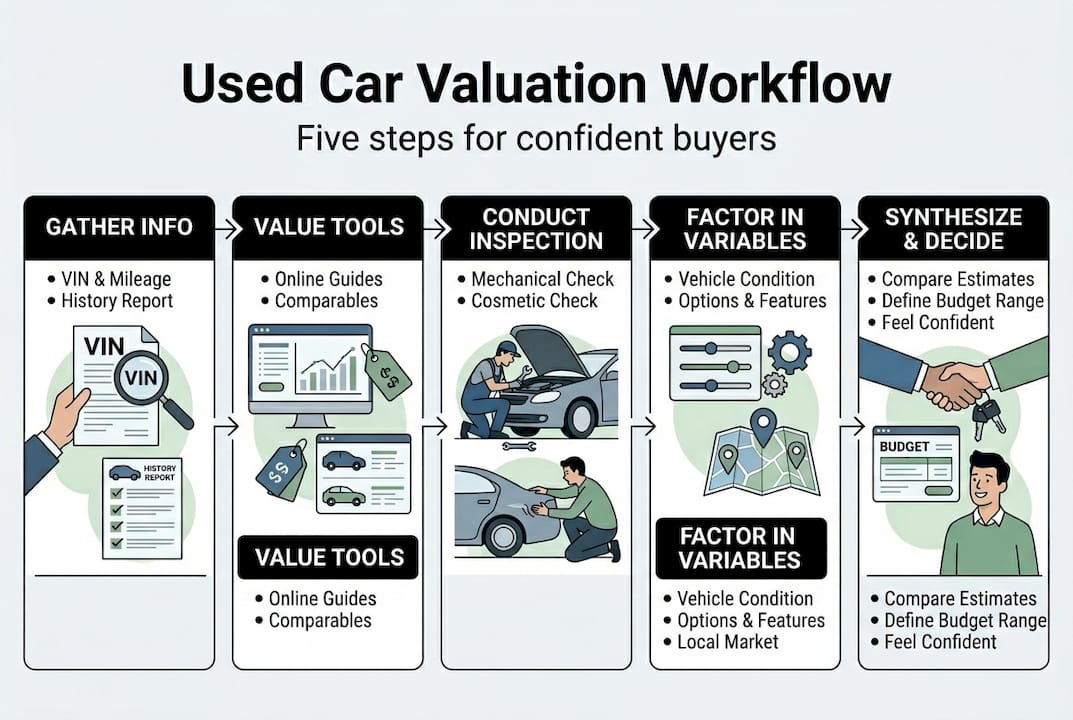
A workflow that runs estimates from multiple sources, checks vehicle history, and adjusts for condition and market data is the only way to arrive at a number you can trust. Here's how to execute it:
- Enter vehicle details into all three tools. Use KBB, Edmunds TMV, and NADA simultaneously. Record each estimate and note the range.
- Compare to local listings. Search your ZIP code on platforms like CarGurus or AutoTrader. What are similar vehicles actually selling for nearby?
- Order a vehicle history report. Use Carfax or AutoCheck. Look for accident records, title brands, odometer rollbacks, and ownership history.
- Assess the condition honestly. Grade the car as Excellent, Good, Fair, or Poor based on what you see and what the history report reveals.
- Apply market adjustments. Factor in regional demand, seasonal trends, and any repairs the car needs.
Accurate mileage and a clean VIN history are not optional checkboxes. They are the foundation of every reliable valuation. A car with a hidden rollback or a branded title is worth dramatically less, regardless of how good it looks.
Hybrid appraisal and market comparables provide a more accurate value than any single tool alone. That's not an opinion. It's how professional appraisers work.
| Tool | Private party value | Trade-in value | Dealer retail | Regional data |
|---|---|---|---|---|
| KBB | Yes | Yes | Yes | Moderate |
| Edmunds TMV | Yes | Yes | Yes | Strong |
| NADA | Limited | Yes | Yes | Moderate |
For a more thorough breakdown of how these tools compare, this detailed valuation guide covers the nuances well. You can also review detailed car inspection steps to understand how condition grading feeds into your final number.
Inspection and condition assessment: uncovering hidden issues
Now that you understand the workflow, let's focus on the pivotal step that can save or lose you thousands: inspection and honest condition assessment.
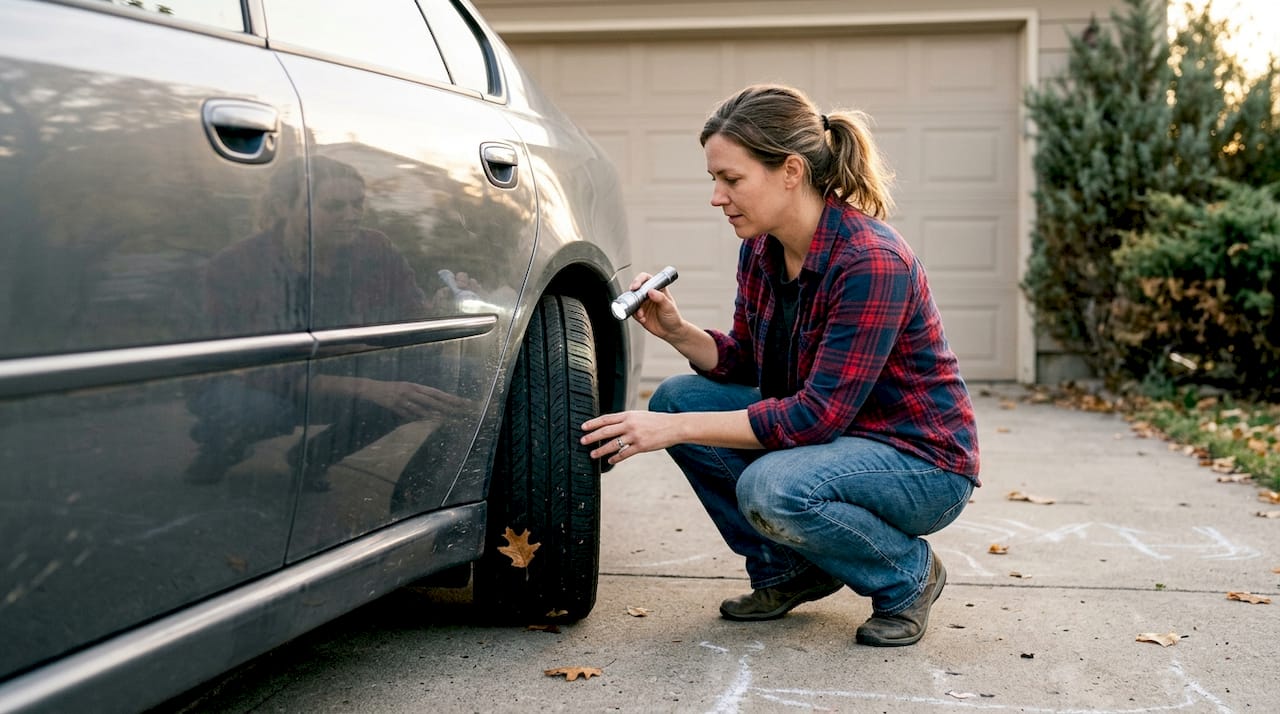
Mechanical, cosmetic, and VIN history checks are crucial, and every repair or defect you find should adjust the value downward. Most buyers skip this step or rush through it. That's exactly what sellers are counting on.
Here are the hidden issues that most commonly blindside buyers:
- Frame or structural damage: Often invisible to the naked eye but catastrophic for safety and resale value.
- Odometer fraud: Rolled-back mileage is more common than you'd expect, especially on older vehicles.
- Major engine or transmission repairs: Look for fresh gaskets, new hoses, or mismatched bolts that suggest recent work.
- Flood damage: Check under carpets and in the trunk for water stains, rust, or a musty smell.
- Airbag or safety system issues: Deployed airbags that were never properly replaced are a serious liability.
During your inspection, walk through these checkpoints methodically: engine condition, brake wear, tire depth and evenness, suspension feel, paint consistency, and interior electronics. Then take it on a test drive that includes highway speeds and hard braking.
Pro Tip: Worn tires alone can knock $800 to $1,200 off a car's fair value. A set of bald tires isn't just a safety issue. It's a negotiating point. Document every defect you find before you make an offer.
Studies show that most buyers overestimate vehicle condition by at least one grade, which translates to an average mispricing of around 10%. Grading honestly matters. Use this scale:
| Condition grade | What it means | Typical value adjustment |
|---|---|---|
| Excellent | Like new, no defects | Full book value or above |
| Good | Minor wear, no major issues | Book value |
| Fair | Visible wear, minor repairs needed | 5 to 15% below book |
| Poor | Major repairs required | 20% or more below book |
For buyers who want professional eyes on a vehicle, pre-purchase inspections are the most reliable way to grade condition without guessing.
Troubleshooting common pitfalls and edge cases
A solid inspection is crucial, but don't overlook the special cases and common errors that can trip up even careful buyers.
Edge cases include rare models, title and salvage issues, regional demand spikes, and condition overestimation. These scenarios don't show up often, but when they do, they can cost you dearly if you're not prepared.
Watch out for these less obvious but costly situations:
- Salvage or rebuilt titles: These vehicles can be 20 to 40% cheaper, but financing, insurance, and resale become serious challenges.
- Regional demand spikes: A pickup truck in a rural market may command a 10 to 15% premium over national book value.
- High-mileage penalties: Most tools apply steeper deductions above 100,000 miles. Verify this is reflected in your estimate.
- Rare or low-production models: Thin market data means pricing tools may be unreliable. Comparable listings become your primary reference.
- Seasonal pricing shifts: Convertibles spike in spring. Four-wheel-drive vehicles peak in fall. Timing your purchase can save real money.
Pro Tip: For rare models or vehicles in thin markets, expand your search radius to 200 to 300 miles. More comparables mean a more defensible price. Don't anchor to a single regional listing.
One area where buyers consistently make common valuation mistakes is overestimating condition. It feels natural to see a clean interior and assume the car is in great shape. But cosmetics and mechanical integrity are two very different things.
Electric vehicles add another layer of complexity. EV depreciation curves differ sharply from gas vehicles, and the EV index is up +7.9% year over year, meaning used EVs are holding value better than expected in many segments. Battery health, charging infrastructure, and available tax credits all factor into EV valuation in ways that standard tools don't always capture. If you're shopping for an EV, treat it as a separate research project with its own set of comparables.
Why a systematic workflow beats shortcuts: our expert take
Having reviewed all the steps and pitfalls, here's why taking your time with this workflow is non-negotiable.
We've seen buyers walk away from deals that looked perfect on paper, only to thank themselves later. We've also seen buyers ignore every warning sign because they fell in love with a car. Emotion is a buyer's worst enemy during valuation. Urgency is the second worst. Sellers know this. They use time pressure and emotional appeal deliberately.
The buyers who avoid disaster share one trait: they follow a process and they don't skip steps. Prioritizing VIN history and a mechanic's inspection can prevent expensive mistakes that no amount of negotiation can fix after the fact.
One shortcut we see constantly is relying on a single pricing tool. KBB alone is not enough. Neither is Edmunds. Each tool has blind spots, and no algorithm accounts for the specific condition of the specific car sitting in front of you. That's why valuation workflow insights consistently point back to combining tools, checking history, and physically inspecting the vehicle.
The time you invest in this workflow is a fraction of what you could lose by skipping it. A few hours of due diligence can protect thousands of dollars. That's not a cliche. That's math.
Take the next step: professional help for confident car buying
Ready to put this workflow into action? Here's how to get expert guidance and protect your investment.
Knowing the steps is powerful. Having a professional execute them is even better. Our professional car inspections are designed specifically for used car buyers who want certainty before they commit. We send a certified inspector to the vehicle, wherever it is, and deliver a detailed report within 24 hours covering condition, estimated repair costs, and market value.

You don't have to guess. You don't have to take the seller's word for it. Schedule an inspection before you buy, and walk into that negotiation knowing exactly what the car is worth and what it's hiding. That's the smartest move you can make.
Frequently asked questions
What information do I need for an accurate used car valuation?
You'll need the vehicle's VIN, year, make, model, trim, mileage, options, and ZIP code. Gathering these details before you open any pricing tool ensures your estimate reflects the actual vehicle.
How does a pre-purchase inspection impact car value?
Inspections uncover hidden issues like mechanical defects or accident history that directly reduce a car's fair value. Pre-purchase inspections adjust value downward for repairs and give you real leverage in negotiations.
Which online tools are best for valuing used cars?
The top tools are Kelley Blue Book, Edmunds TMV, and NADA Guides. Using all three together gives you a reliable price range rather than a single number that may not reflect your local market. See KBB car values as a starting point.
What affects a used car's value the most?
Condition, accident history, mileage, and regional demand have the biggest impact. Major factors like title history and market trends can shift a car's value by thousands in either direction.
Are electric vehicles valued differently than gas cars?
Yes. EVs have unique depreciation curves and battery health considerations that standard tools don't always capture. The EV index is up +7.9% year over year, meaning used EVs are currently holding value better than many gas-powered alternatives.