
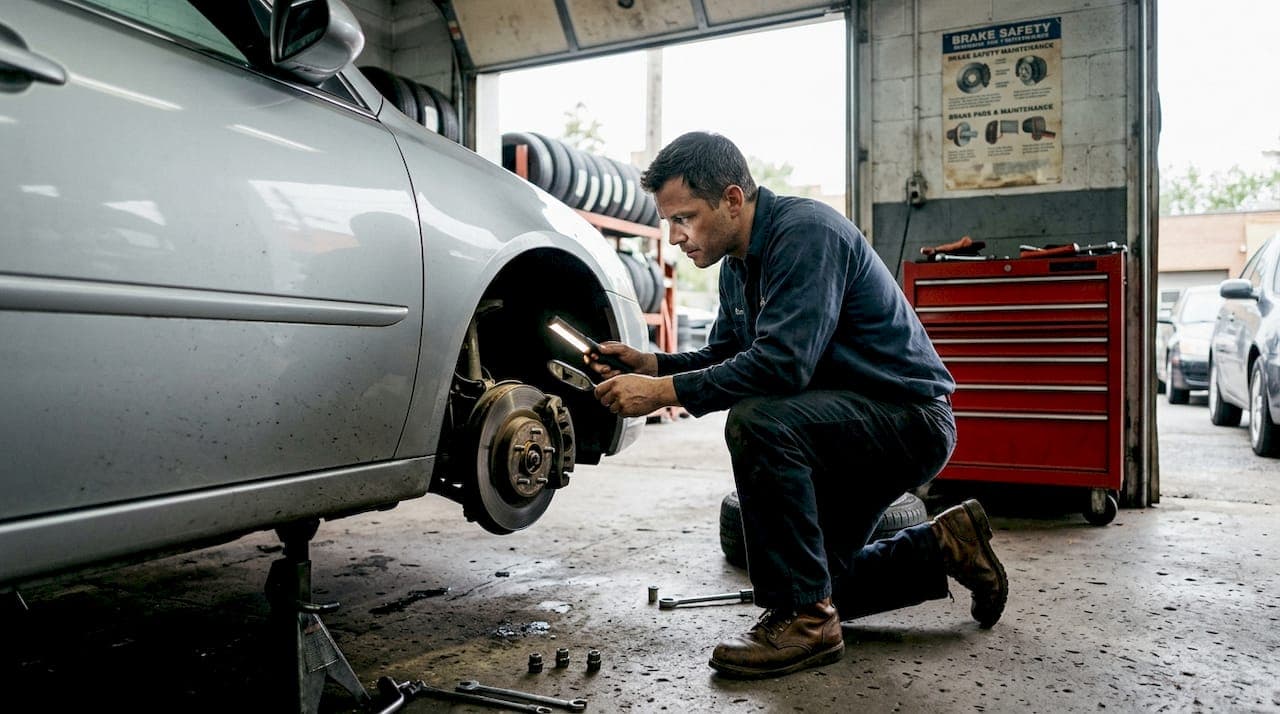
Most used car buyers check the tires, scan for rust, and maybe take a quick look under the hood. Brakes? They assume a visual glance is enough. That assumption is expensive. A brake inspection covers much more than pads alone. It includes hydraulics, the parking brake, ABS systems, and components that can reveal serious problems from previous ownership. Skipping a thorough brake check is one of the most common mistakes buyers make. In this guide, we'll walk you through exactly what a brake inspection involves, how mechanics do it, what hidden problems to watch for, and how to use this knowledge to buy smarter.
Table of Contents
- What is a brake inspection?
- How mechanics perform brake inspections
- Hidden brake issues in used cars
- Brake inspection tips for used car buyers
- Why most brake inspections miss what really matters
- Get expert brake inspections for peace of mind
- Frequently asked questions
Key Takeaways
| Point | Details |
|---|---|
| Full-system check | A real brake inspection covers pads, rotors, calipers, hoses, fluid, and electronics—not just pad wear. |
| Hidden problems exist | Used cars can have brake issues like stuck calipers and deteriorated hoses that casual checks may miss. |
| Professional inspection is best | Only a thorough mechanic-led inspection reliably finds the problems most dangerous to your safety. |
| Use inspections as leverage | Inspection reports can help buyers negotiate for repairs or better pricing when purchasing a used vehicle. |
What is a brake inspection?
A brake inspection is a structured evaluation of every component in your vehicle's braking system. It's not just a quick look at the pads. A full brake inspection covers the entire system from the pedal you press down to the hardware gripping your rotors.
Here's what a complete inspection covers:
- Brake pads: Thickness is measured to determine remaining life. New pads typically start at 10 to 12mm. Anything below 3mm is a replacement warning.
- Rotors: Inspected for scoring, warping, heat cracks, and minimum thickness. A warped rotor causes pedal pulsation and longer stopping distances.
- Calipers: Checked for smooth movement, leaks, and even clamping force on both sides of the rotor.
- Brake hoses and lines: Examined for swelling, cracking, corrosion, or leaks. A hose that looks fine outside can be collapsing internally.
- Brake fluid: Evaluated for color, clarity, and contamination. Dark or milky fluid signals moisture intrusion, which lowers boiling point and reduces braking performance.
- Parking brake: Tested for proper engagement and release, whether cable-operated or electronic.
For used cars specifically, this inspection becomes even more critical. You don't know how the previous owner drove. You don't know if they ignored warning lights or skipped service intervals. A brake inspection evaluates pads, rotors, calipers, hoses, lines, fluid, and parking brake as a complete system, not isolated parts.
A car can pass a basic visual check and still have brakes that are weeks away from failure. That's the risk you take without a professional inspection before you hand over your money.
How mechanics perform brake inspections
Understanding each inspection step helps buyers recognize what a professional mechanic will look for and why it matters.
Here's how a thorough brake inspection typically unfolds:
- Wheels removed: The mechanic pulls all four wheels to get direct access to the brake hardware. This is non-negotiable for a real inspection.
- Visual inspection: Every component is examined closely. Pads, rotors, calipers, hoses, and lines are all checked for wear, damage, and leaks.
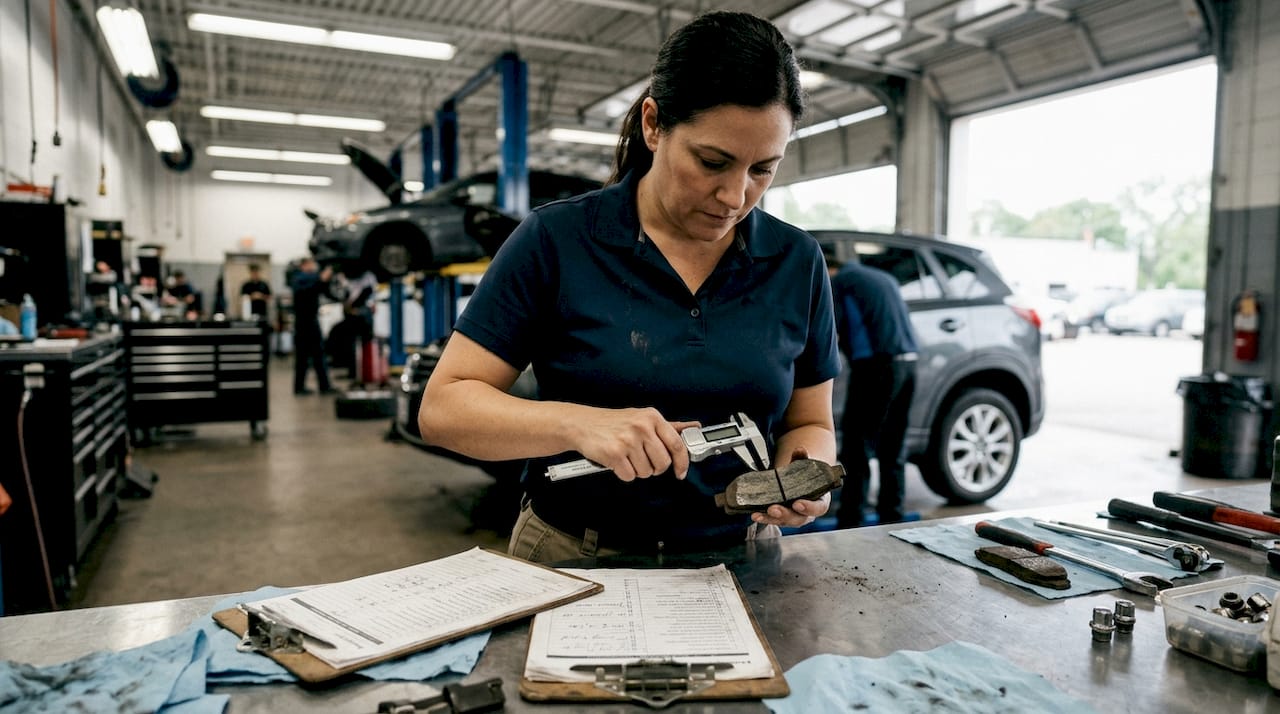
- Measurement with tools: A micrometer or caliper tool measures pad thickness and rotor depth precisely. Guessing by eye is not acceptable.
- Caliper function test: The mechanic slides the caliper to confirm it moves freely. A sticky caliper causes uneven wear and heat buildup.
- Fluid check: Brake fluid is tested for moisture content and contamination using a test strip or refractometer.
- Electronic system scan: For vehicles with electronic parking brakes or advanced ABS, a scan tool checks for fault codes that won't show up visually.
Here's a quick reference for what acceptable versus worn measurements look like:
| Component | New/Good condition | Needs attention | Replace immediately |
|---|---|---|---|
| Brake pads | 10 to 12mm | 4 to 6mm | Below 3mm |
| Rotors | At spec thickness | Near minimum | Below minimum spec |
| Brake fluid | Clear/light yellow | Slightly dark | Dark brown or milky |
As a standard benchmark, pads start at 10 to 12mm new and should be replaced when they drop below 3mm. Rotors must stay above the manufacturer's minimum thickness or they lose the ability to absorb heat safely.
Pro Tip: At the dealership, crouch down and look through the wheel spokes. You can often see the rotor surface and the outer brake pad. Heavy scoring on the rotor or a paper-thin pad visible from outside is a red flag. It won't tell you everything, but it tells you something.
What you cannot realistically check yourself: inner pad wear, internal hose condition, caliper stiction (slight sticking), fluid contamination level, and any electronic system faults. These require tools and trained eyes.
Hidden brake issues in used cars
Knowing about these hidden problems gives you the edge before you sign anything.
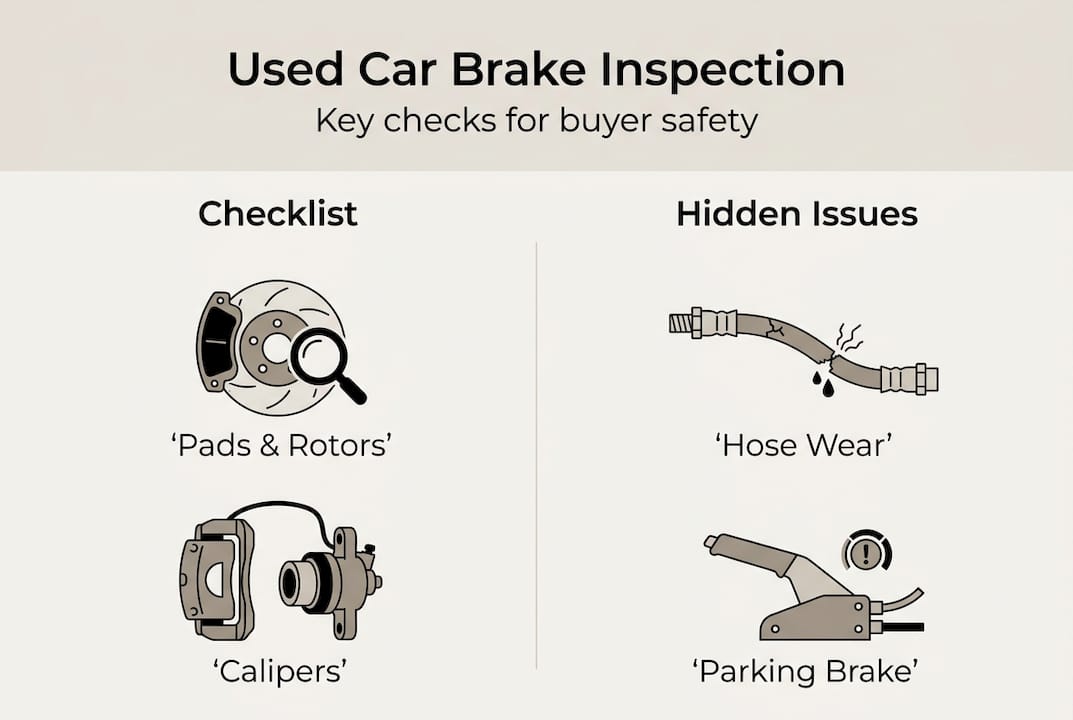
Even a recently serviced car can have brake problems that aren't obvious at first glance. Sellers sometimes replace the most visible components, like outer pads or a single rotor, without addressing the full system. That's a short-term fix hiding a longer-term problem.
Here are the most common hidden brake issues in used vehicles:
- Uneven pad wear: The inner pad wears faster than the outer. If only the outer is checked, a pad worn to bare metal on the inside gets missed entirely.
- Stuck or sticky calipers: A caliper that doesn't release fully causes one side to drag. This creates heat, accelerates wear, and can lead to brake fade when you need stopping power most.
- Internally swollen hoses: A brake hose can look clean and intact from the outside while the inner lining is deteriorating. This restricts fluid flow and creates a one-way valve effect, keeping pressure on the caliper even after you release the pedal.
- Contaminated brake fluid: Moisture in brake fluid lowers its boiling point. Under hard braking, this causes vapor lock, where the fluid boils and braking performance drops sharply.
- Warped rotors: Often caused by aggressive braking or overheating. You'll feel pulsation through the pedal, but a seller may not mention it.
A comparison of what's visible versus what's hidden:
| Issue | Visible without removal? | Detectable by buyer alone? |
|---|---|---|
| Outer pad thickness | Sometimes | Partially |
| Inner pad wear | No | No |
| Caliper stiction | No | No |
| Internal hose swelling | No | No |
| Fluid contamination | No | No |
For used car inspection tips that go beyond the basics, understanding these hidden risks is the starting point. As brake specialists consistently note, the most dangerous failures are the ones hiding out of sight, not the ones you can spot from the curb.
"Uneven pad wear, stuck calipers, internal hose problems, contaminated fluid, and warped rotors are typical hidden issues in used vehicles that standard visual checks miss entirely."
Electronic parking brakes add another layer of complexity. These systems require a scan tool to retract the caliper piston during service. Without one, a mechanic can't fully inspect or service them, and a buyer certainly can't.
Brake inspection tips for used car buyers
Once you know what to look for, you can use this information to buy smarter and negotiate harder.
Here's a step-by-step approach for buyers:
- Do a quick visual check first. Look through the wheel spokes for rotor scoring and visible pad thickness. Check for brake dust buildup, which can indicate a dragging caliper.
- Test the pedal feel. During a test drive, press the brake pedal firmly. It should feel solid and consistent, not spongy, pulsating, or sinking toward the floor.
- Listen carefully. Squealing suggests worn pads. Grinding means metal on metal. Clunking during braking points to loose hardware.
- Check the dashboard. Any brake warning light, including the ABS light, is a signal that needs investigation before purchase.
- Ask the seller directly. Request records of brake service, including what was replaced, when, and by whom. No records is itself a red flag.
Questions worth asking the seller:
- When were the brake pads last replaced?
- Have the rotors been resurfaced or replaced?
- Has the brake fluid been changed recently?
- Has any brake warning light appeared?
Full brake inspections are especially critical in used vehicles due to hidden or developing wear from prior ownership. Don't let a seller's assurance replace a professional report.
Pro Tip: If an inspection report reveals brake issues, use it as a negotiation tool. Get a repair estimate and ask the seller to either fix the problem before sale or reduce the price accordingly. A written inspection report gives you real leverage.
For thorough pre-purchase vehicle checks that cover brakes and beyond, always insist on a professional inspection before you finalize any deal. The cost of an inspection is a fraction of what a brake system overhaul will run you after the fact.
Why most brake inspections miss what really matters
Here's the uncomfortable truth we've learned from inspecting hundreds of used cars: most brake checks are surface-level theater.
A quick shop inspection, or worse, a seller-led "we just had it serviced" claim, typically covers pads and maybe rotors. That's it. The components that cause the most dangerous failures, stuck calipers, deteriorating hoses, contaminated fluid, faulty electronic parking brakes, are almost never checked unless someone specifically asks for a full-system evaluation.
We've seen cars with brand-new outer pads and inner pads worn completely to metal. We've seen hoses that looked perfect from the outside and were collapsing internally under pressure. These aren't rare edge cases. They're patterns.
Our position is straightforward: never accept a partial brake check as a complete one. A detailed brake inspection must cover every component in the system, with measurements, not just a visual once-over. If a seller or shop can't tell you the exact pad thickness, rotor measurement, and fluid condition, the inspection wasn't complete. Demand more. Your safety depends on it.
Get expert brake inspections for peace of mind
You've now seen how much a real brake inspection covers and how much a basic check can miss. DIY checks and seller assurances only go so far.
We offer mobile pre-purchase vehicle inspections that include a full brake system evaluation, along with condition reports, market value assessments, and estimated repair costs, all delivered within 24 hours. Our professional brake inspection service is designed for buyers who want to know exactly what they're getting before they pay. Book an inspection with our certified car inspectors and buy your next used car with real confidence, not just hope.
Frequently asked questions
How often should brakes be inspected on a used car?
Brakes should be professionally inspected before buying any used car and then at least once a year or every 12,000 miles for ongoing safety. Pre-purchase is the most critical moment.
What signs suggest a used car needs a brake inspection?
Listen for squealing or grinding, feel for a spongy or pulsating pedal, and watch for any brake or ABS warning lights. These common warning signs mean a professional check is needed before you buy.
Can I do a brake inspection myself when buying a used car?
You can spot obvious issues like thin visible pads or dark fluid, but internal hose swelling and stuck calipers require a trained mechanic with the right tools to find.
Do electronic parking brakes change how inspections are done?
Yes. Electronic parking brakes require a scan tool and special procedures that go beyond what any visual inspection or DIY check can cover.